Natural vs Synthetic Diamonds: What’s the Difference?
Diamonds have always created conversation. How big? What shape? What colour? Natural or synthetic?
That last question has become increasingly common in recent years, as synthetic diamonds have become far more widely available to consumers. But with that choice has also come a lot of terminology, opinion and, quite frankly, confusion.
Natural diamonds. Laboratory-grown diamonds. Laboratory-created diamonds. Synthetic diamonds. Man-made diamonds. And then there are diamond simulants, which are something different entirely!
So, what does it all mean? And if you're choosing a diamond for an engagement ring or another piece of jewellery, does one make a better choice than the other? The answer isn't as straightforward as you might think.
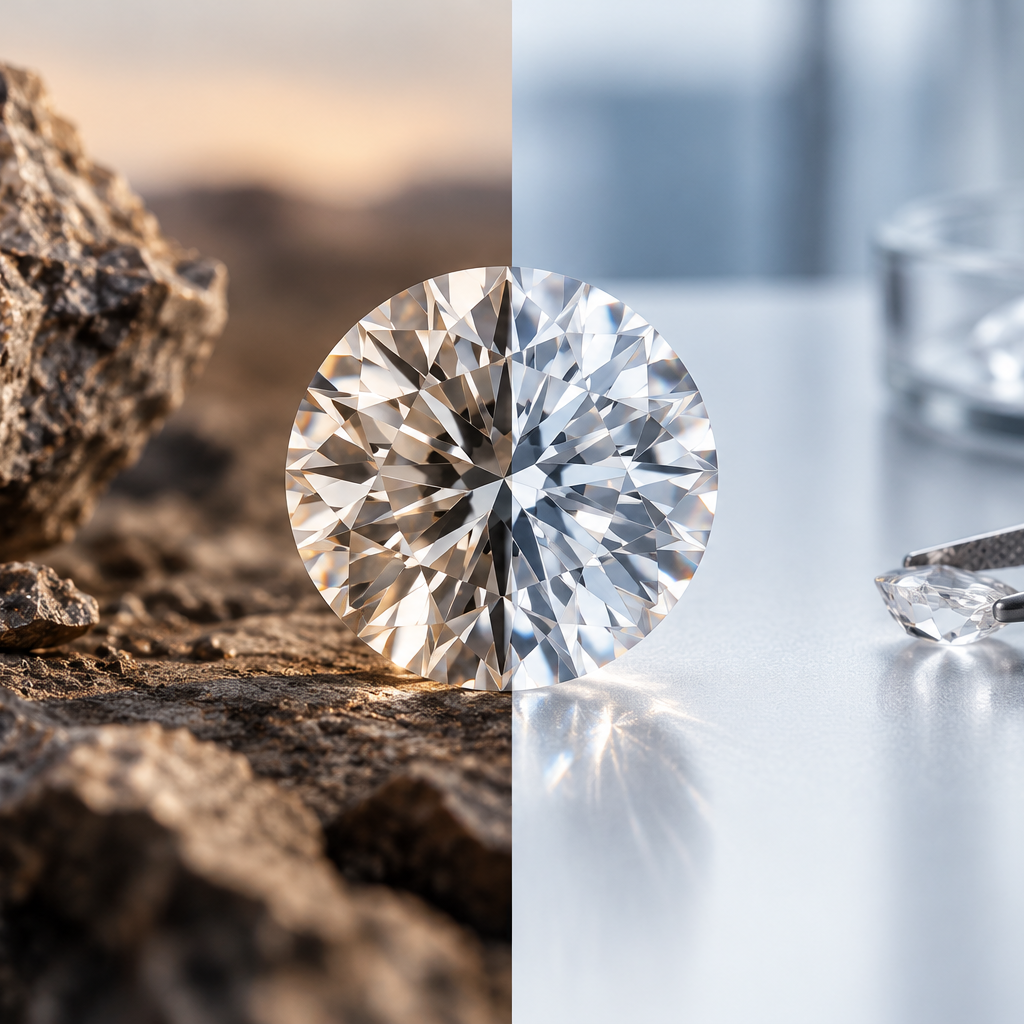
First Things First: What Is a Natural Diamond?
A natural diamond is exactly that: natural.
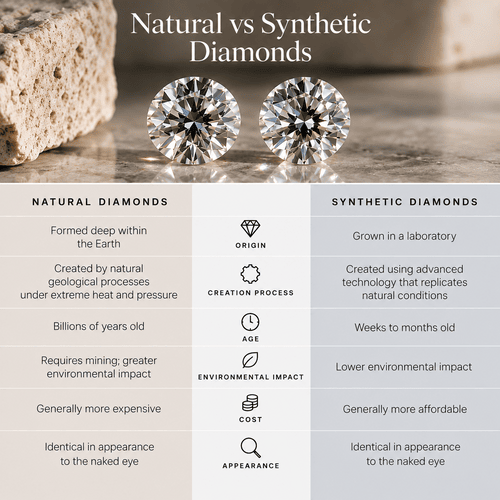
Diamonds form deep within the Earth under conditions of immense heat and pressure. Most natural diamonds are incredibly old, we’re talking billions of years, with their formation taking place over geological timescales before being transported towards the Earth's surface.
What eventually reaches a jeweller has therefore been on quite a journey before it ever becomes part of a piece of jewellery.
Natural diamonds are predominantly carbon arranged in a particular crystal structure, which gives diamond its distinctive properties, including its famous hardness and ability to interact beautifully with light.
Once recovered, rough diamonds are assessed, planned, cut and polished before eventually finding their way into the jewellery market.
So, What Is a Synthetic Diamond?
A synthetic diamond is created by a technological process rather than forming naturally within the Earth.
This is where one of the biggest misconceptions appears.
A synthetic diamond is not the same thing as a diamond simulant such as cubic zirconia or moissanite.
Synthetic diamonds have essentially the same chemical composition, crystal structure and physical and optical properties as natural diamonds. They are diamonds in material terms; the fundamental difference is their origin.
There are two principal methods used to produce them: HPHT (High Pressure High Temperature) and CVD (Chemical Vapour Deposition).
HPHT recreates some of the high-pressure, high-temperature conditions associated with natural diamond formation, while CVD grows diamond from a carbon-containing gas in a controlled environment.
Both processes result in diamond material that can then be cut and polished for use in jewellery.
Can You Tell the Difference by Looking at Them?
Not necessarily.
To the naked eye, a well-cut natural diamond and a well-cut synthetic diamond can look the same.
Synthetic diamonds possess essentially the same optical and physical properties as natural diamonds, which means you cannot reliably determine their origin simply by looking at them.
Specialist testing equipment and gemmological expertise are used to identify whether a diamond is natural or synthetic.
This is one reason why provenance, disclosure and trusted suppliers are so important when buying diamonds.
Why Am I Calling Them “Synthetic Diamonds”?
You may be more familiar with the term “laboratory-grown diamond” or “lab diamond”, so it's worth taking a moment to talk about terminology.
The language surrounding this part of the diamond industry has been evolving for some time.
The Diamond Terminology Guideline, supported by several major international diamond organisations including the World Federation of Diamond Bourses (WFDB), distinguishes a diamond created by nature from a synthetic diamond created artificially.
The recognised terms include synthetic diamond, laboratory-grown diamond and laboratory-created diamond. The WFDB has long supported “synthetic diamond” as an authorised term, while the wider industry continues to debate which terminology gives consumers the clearest distinction between diamonds formed naturally and those created through technological processes.
For me, the important point isn’t about making one sound better or worse than the other. It’s about transparency. Whatever terminology is used, you should know exactly what you’re buying.
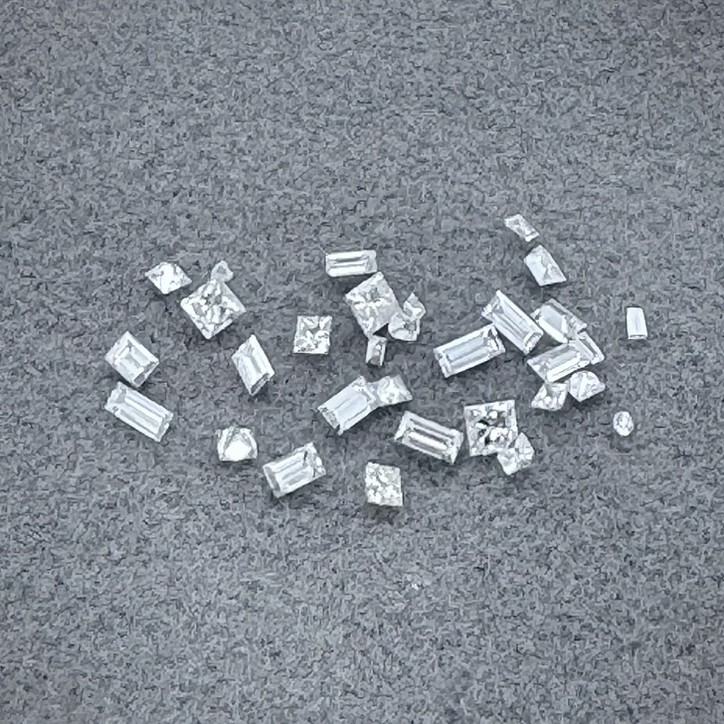
Do They Both Have the 4Cs?
You’ll still see synthetic diamonds described in the marketplace using familiar ideas such as carat weight, colour, clarity and cut, but the way laboratories report their quality is changing.
For example, GIA now uses a separate quality assessment for qualifying colourless-to-near-colourless laboratory-grown diamonds, describing them as either “Premium” or “Standard”, rather than applying its traditional natural-diamond colour and clarity grading nomenclature in the same way.
For clients, the important thing is to understand what the information accompanying a particular stone actually means rather than relying on a string of letters and numbers alone.
For a client, the important thing is to understand what the information accompanying a particular stone actually means rather than relying on a string of letters and numbers alone.
This is where guidance from someone who understands diamonds can be particularly helpful.
What About Price?
This is probably one of the biggest differences clients notice.
Synthetic diamonds generally cost considerably less than comparable natural diamonds, which means they can allow someone to choose a larger stone or different specification while remaining within a particular budget.
Natural and synthetic diamonds also operate within different markets, and their pricing and potential future values shouldn't be assumed to behave in the same way.
For that reason, I don't think choosing between them should simply be a case of comparing two stones of the same size and asking which costs less.
The better question is: What matters most to you?
The Case for a Natural Diamond
For some people, the natural origin of a diamond is fundamental to its appeal.
They love the idea that the stone was created by nature and existed long before any of us did. Each natural diamond has its own characteristics and inclusions, and that individuality can be part of its charm.
For an engagement ring or future heirloom, that story and provenance may be particularly meaningful.
Natural diamonds also have an established global market and a very long history within fine jewellery.
For some clients, that's exactly what they want.
The Case for a Synthetic Diamond
For other clients, origin isn't the deciding factor.
They may simply love the appearance of diamond and want to achieve a particular size or look within their budget.
Because synthetic diamonds have a lower purchase price than comparable natural diamonds, they can offer significantly more flexibility when balancing size, design and budget.
Someone might decide that they'd rather allocate more of their budget to an intricate setting, additional gemstones or simply choose a larger centre stone. And that's a perfectly valid choice, which is down to each individual, and isn’t a choice a jeweller should make on behalf of the client.
What About Sustainability?
This is an area where I'd encourage consumers to be wary of sweeping claims in either direction.
You may see synthetic diamonds described as inherently more sustainable or environmentally friendly simply because they aren't mined. Equally, you'll see arguments about the economic and social contributions of natural diamond mining.
The reality is more complicated.
Synthetic diamond production requires energy, and its environmental impact can vary depending on how and where that energy is generated. Natural diamond production has its own environmental considerations, while responsible mining operations can also support employment, infrastructure and communities.
If sustainability is an important part of your decision, ask questions.
Where did the diamond come from? How was it produced or sourced? What information is available about the supplier?
A broad marketing claim shouldn't be a substitute for understanding the individual stone and its supply chain.
Natural vs Synthetic: Is One Better?
This is where I may disappoint you.
There isn't a universal winner. And I don't think there needs to be.
My role as a private jeweller isn't to tell a client that they should want a natural diamond or should choose a synthetic one. It's to explain the differences honestly so they can make an informed decision.
For one client, the geological history, provenance and established market of a natural diamond may be hugely important. For another, being able to achieve a particular aesthetic or carat weight within their budget may make a synthetic diamond the right choice.
Jewellery is personal. Your priorities should determine the stone—not somebody else's opinion.
Questions to Ask Before You Choose
If you're deciding between a natural and synthetic diamond, consider what matters most to you.
Is natural origin important?
What is your overall budget?
Is size a priority?
Is the diamond's potential future value important to you?
Do you have particular views about provenance or production?
Is this a piece you intend to pass down?
And perhaps most importantly: which stone do you actually love when you see it?
Specifications and certificates give us valuable information, but jewellery ultimately has to make you feel something.
Considered Advice Is Always the First Step
One of the benefits of working with a private jeweller is that you don't need to arrive knowing all the answers.
You don't need to understand HPHT versus CVD, know exactly which clarity grade you want or have decided whether natural or synthetic is right for you. That's part of my job.
I can talk you through the differences, source suitable options and help you compare them within the context of your budget, your design and what matters to you.
Because whether your final choice is natural or synthetic, the most important thing is that you understand what you're buying and feel confident that it's the right choice for your story.
And that starts with considered, transparent advice. So get in touch to start your story.
Related Articles
The 4Cs: What it Means For Your Diamond
The likelihood is you’ll have heard the phrase ‘the 4Cs’. But what do these 4Cs mean and how important are they? Read on to find out more
10 Diamond Facts You Might Not Know (But Definitely Should)
Think you know about diamonds? Test your knowledge with these facts!